
Introduction
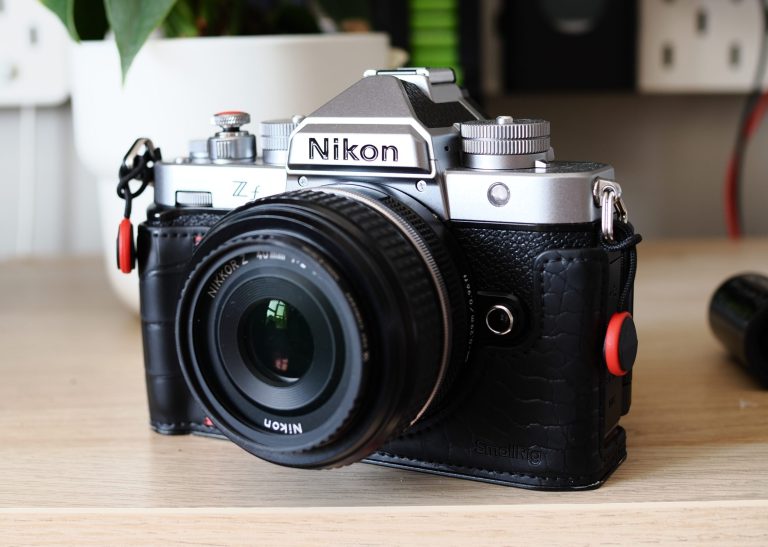
My Nikon Zf is currently sat on my workbench. Beside it are the original boxes the camera, and its accompanying lenses, came with. Pretty soon, I’ll have taken pictures of everything, boxed it all up and sold it to a buyer on eBay who will undoubtedly be delighted to take ownership of this beautiful, capable, camera.
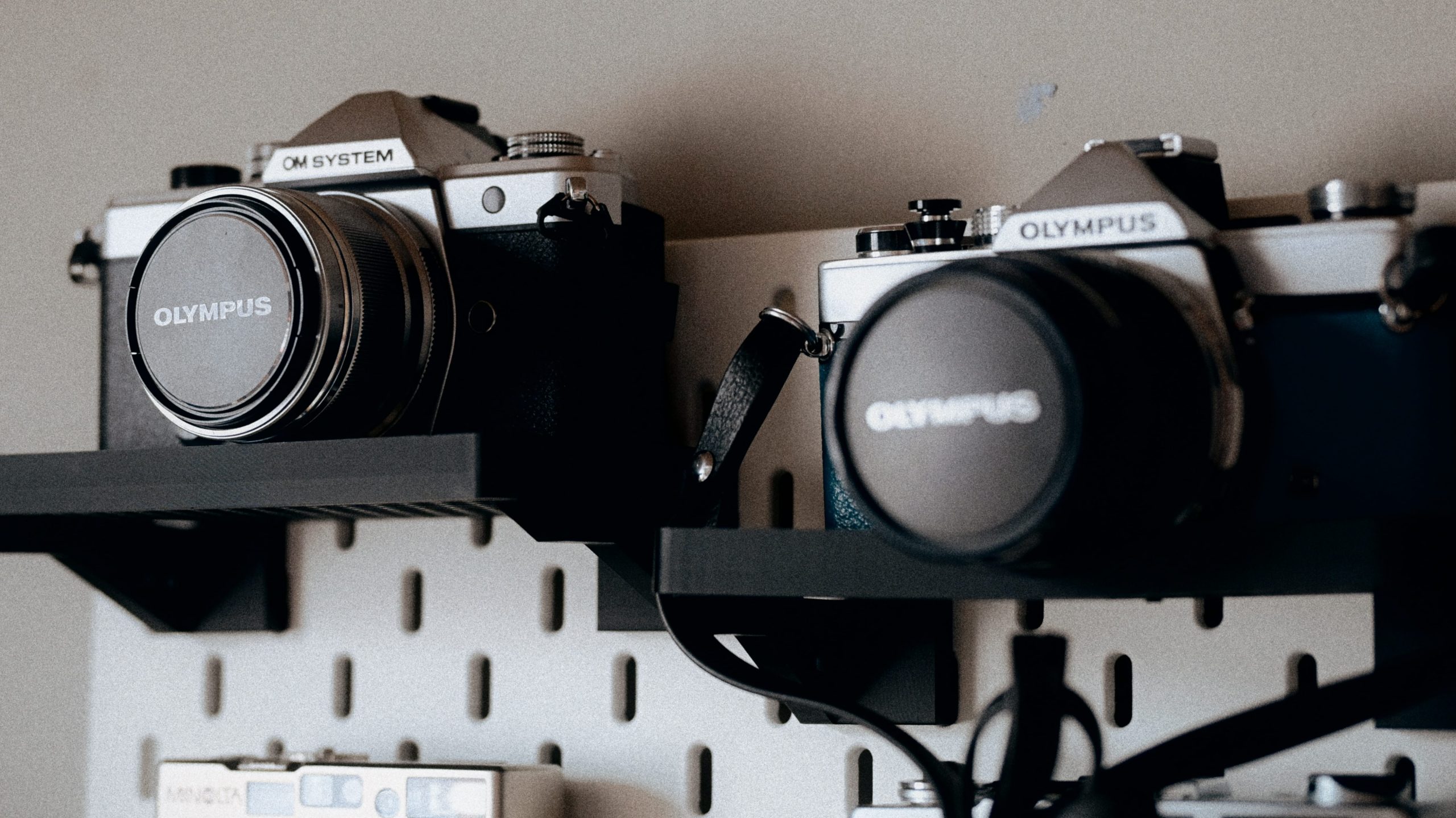
On my shelf, where my cameras live, an OM System OM-3 replaces the Zf and now sits in harmony, next to its older brother, 1973’s Olympus OM-1 SLR. While the symmetry is satisfying and the family resemblance uncanny, how did it come to pass that the full frame, retro-styled beast that is the Nikon Zf with the internals of the professional grade Nikon Z6 II, was usurped by the micro four-thirds OM-3? Well, one is the right camera for me. The other is not.
Zf and Zf again.
After decades of owning prosumer cameras, I found myself without what I’d consider a ‘proper’ camera. With a renewed interest in film photography and a penchant for all things retro, the Nikon Zf seemed like the obvious choice. I won’t bore you with the specs but needless to say, the Zf had everything I wanted and needed, and then some. And it’s beautiful. Seriously beautiful, just like the Nikon FM3a on which it appears to be based.
A thing of beauty is a joy forever
John KeatsAllow me for a moment to talk on that point. Why does the outward beauty of a camera matter? Well, it may not matter to some, but it does matter to me. I value cameras that invite me to pick them up. Cameras which call out to me to take them for a spin. Cameras that sit in the corner of my eyeline and whisper quietly, “Hey, how about you take me out for some fun?!” Keats wrote, “A thing of beauty is a joy forever” so I’m pretty sure Mr. Keats would have been a fan of the Zf.
I purchased a Zf towards the end of 2025. I bought the accessories, the case, grip, extra batteries and the retro-styled 40mm f/2 SE lens and, to get straight to the point, I barely used it. We’ll circle back to this in a little while.
With the majority of my photography these days being analogue, I had no qualms about selling my barely used Zf after just three months. Why keep the capital tied up in equipment I didn’t use? I had convinced myself I needed more lenses; more options. And the cost of lenses seems to increase year-on-year with Nikon Z-Mount and Canon RF lenses being some of the costliest mainstream lenses on the market, not helped by the continuing war against third party manufacturers. In the short term, I wasn’t going to be able to invest heavily in Z-mount and so I made the only sensible decision.
The Zf was packed, boxed up and sold. Even as I was cleaning and factory resetting it ready for sale, I felt a pang of regret. Here was this fantastic camera, with a shutter count under 500 and I was selling it before I had even given it a fair crack of the whip, limited as I was by only having a single lens. By that point, I’d already sold it but regret was biting hard.
Fast forward just six weeks and its replacement, a second Zf, arrived at my door. I hadn’t been able to shake that feeling of regret. And with it came a second lens, a Nikkor 24-120 f/4 lens. Not cheap but very versatile. One lens to rule them all, at least until I could afford to add a few primes to my collection.
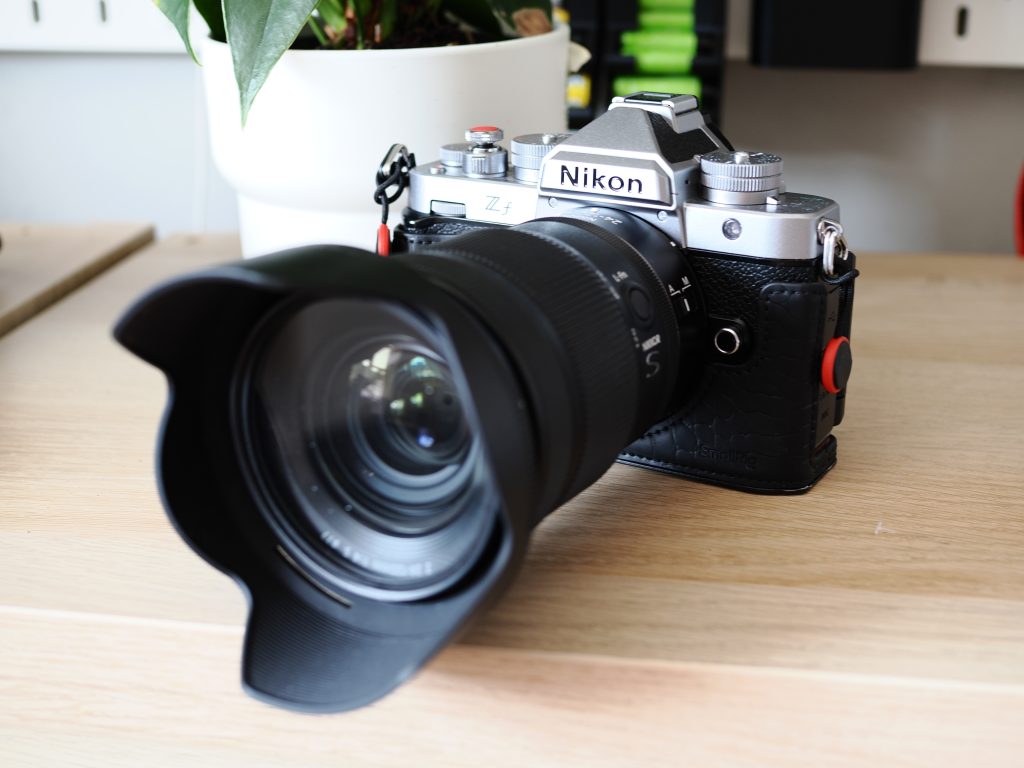
This time, I was determined not to dismiss it quite so easily. This was a camera I wanted to use. For me, film still has its limits and there are occasions where digital really shines. I spent hours dialling in the perfect colour settings. I’ve slowly drifted away from shooting RAW and editing later, preferring instead to get things right in camera. I customised the menus to my liking. And once again, the quality of life improvements: leather grip, extra batteries, were purchased.
The first thing which started to irk me was the omission of a joystick to control the focal points. The mushy feel of the four-way direction pad is just not an adequate substitute. Having owned two Zfs, I don’t believe either one of them has a particular issue and maybe the D-pads would have “worn-in” over time, but damn, they’re soft and squishy when new. Give me good positive presses with proper tactile feedback!
But I could have lived with that.
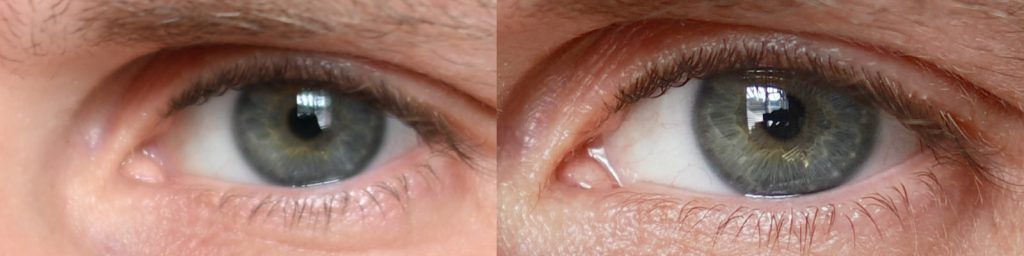
Next, I discovered that the Zf’s subject-detect autofocus is… not great. I have used various cameras with excellent subject detection and eye-detection autofocus over the past few years, so it didn’t occur to me that the autofocus system on the relatively new Nikon Zf would be anything other than brilliant when, in fact, it was anything but. And I mean seriously bad. Repeated testing showed that it would focus on an eyebrow rather than an iris. A factory reset didn’t improve things. While the Nikon Nikkor 40mm f/2 SE lens (wide open) was a particular offender, the 24-120 f/4 only brought marginal improvements in focus accuracy, and I suspect a big part of that was its inherently deeper depth-of-field.
But I could have lived with that.
And then history repeated itself. The time would come to pick up a camera and take it with me for a day out, and the Zf repeatedly passed over, often in favour of one of my film cameras, but also occasionally in favour of my Fujifilm X100VI. I would occasionally pick up the Zf to play with it or to tweak my colour settings but it would always end up back on the shelf and rarely taken past the threshold of the front door.
Slowly, without noticing, I had reached a conclusion. The Zf was the wrong camera for me. It was still as beautiful as the day I bought it. But it’s a big camera, with big lenses. It didn’t suit the type of photography I do nowadays. It was too big and conspicuous to take to family events. Too precious and over the top to take to the pub. Too heavy to take for a ten mile hike. And those are the kinds of pictures I’m taking these days.
I must, at this point, add a heavy caveat. Just because that camera wasn’t right for me in those scenarios doesn’t mean I believe it’s not right for you, dear reader. We each have our own preferences and tolerances and I’ve learned that mine tends towards minimising friction. There are those of you, I’m sure, who would think nothing of taking a camera like the Zf on a walk around the city, or a day at the beach. And it would undoubtedly do a sterling job. But, it turns out, I’d rather take a tiny little Ricoh GR IV over the 1.3kg pairing of Zf and 24-120 f/4 lens.
The problem was never one thing. It was accumulated bits of friction.
Looking back, I don’t think any one of those issues would have made me sell the Zf. Had it only been heavy, I’d have carried it. Had it only lacked a joystick, I’d have adapted. Had the autofocus only been mediocre, I’d have learned to work around it. The problem was never any one thing. It was the accumulation of tiny bits of friction. Each one nudged me towards another camera until, eventually, I stopped reaching for the Zf altogether.
For me, friction is anything that stops me taking a camera out, leaves it sitting in my bag, or gets in the way of taking the shot. Friction is a huge barrier to creativity. I no longer use optical filters and I rarely use a tripod. My photography has become far less deliberate than it once was. I no longer want to carry all the gear, set everything up and wait in one spot for just the right light. I’d rather always have the right camera with me and trust that, over time, consistency will produce more interesting photos than occasional perfection ever could.
With another camera looming large, it was time to say a final goodbye to the Zf. A big, beautiful camera that, sadly, wasn’t right for me.
Enter the OM System OM-3
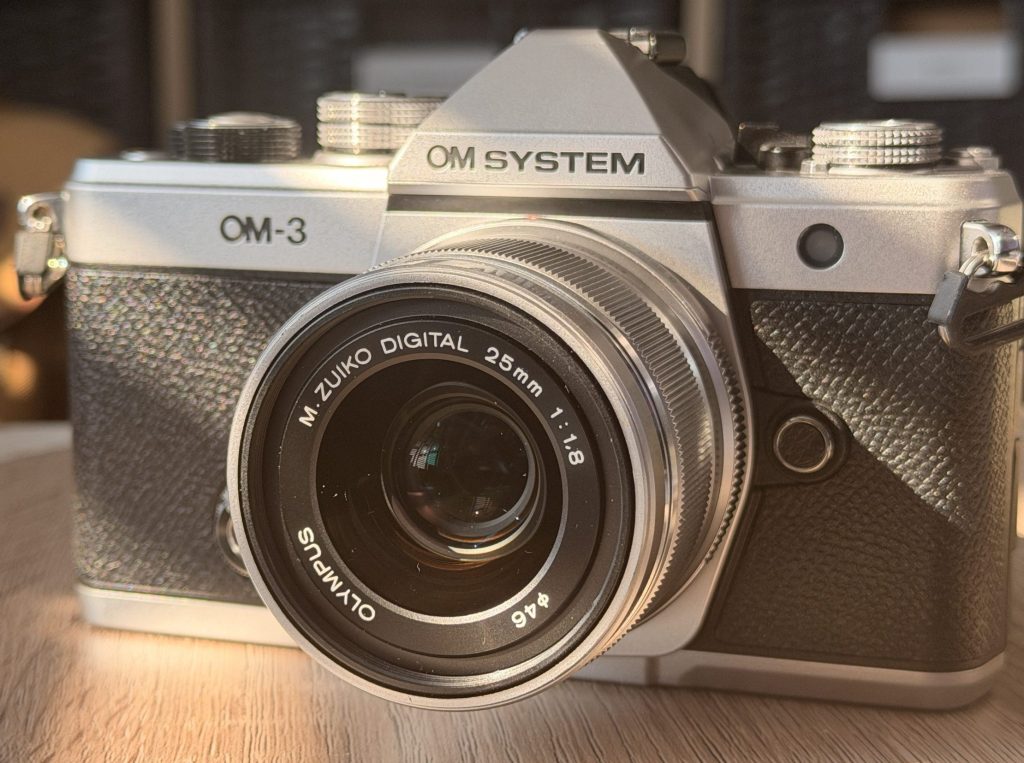
About 18 months ago, I had a tap on the shoulder from a pretty little thing; the kind of thing I’d seen in my dreams. At first glance, it seemed to be an Olympus OM-1 which is, and I will not hear discussion on this, one of the prettiest, most desirable cameras ever made. But this one was digital! Yes, those crazy guys in the land of the rising sun had once again dug into their own history, much like they did with 2016’s digital PEN-F, and released a true successor to their film OM-line which they decided, confusingly, to call the OM System OM-3. And, of course, I was smitten!
It wasn’t cheap and came with the drawbacks of having a micro four-third sensor. Drawbacks which I have subsequently re-evaluated, I might add. So I didn’t rush out to purchase one. Instead, I purchased two Nikon Zf cameras; believing that I needed a full size, full frame camera in my collection.
Had the OM-3 not been glaring at me from stage-left, I may have persevered with the Zf for longer and, believe me, I agonised over the sensibility of switching to micro four-thirds, but I eventually took the plunge.
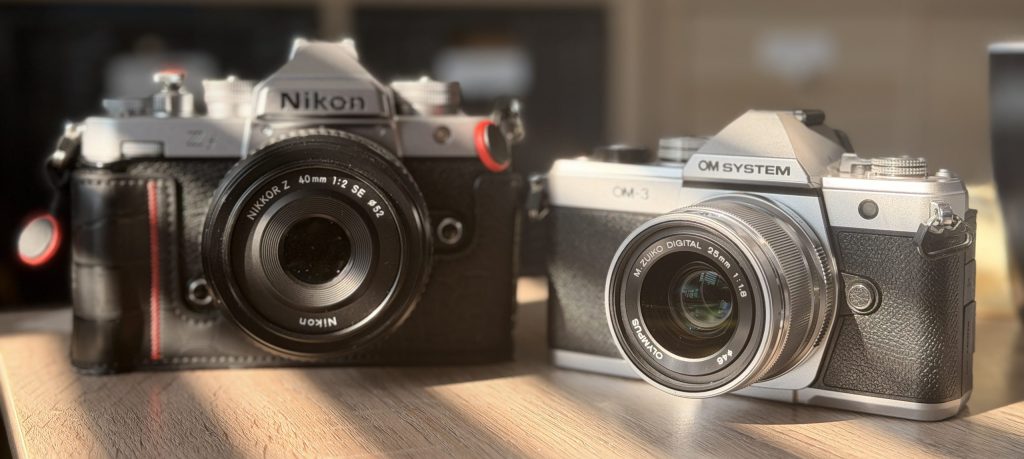
Now the Zf is exiting my collection permanently. The OM-3 takes its place on the shelf and has already exceeded my expectations, not only of itself but of just what micro four-thirds cameras are capable of. Of course, my thoughts on the OM-3 are forthcoming but, suffice to say, at this moment in time I feel like I made the right call.
