
Introduction
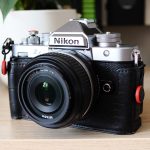
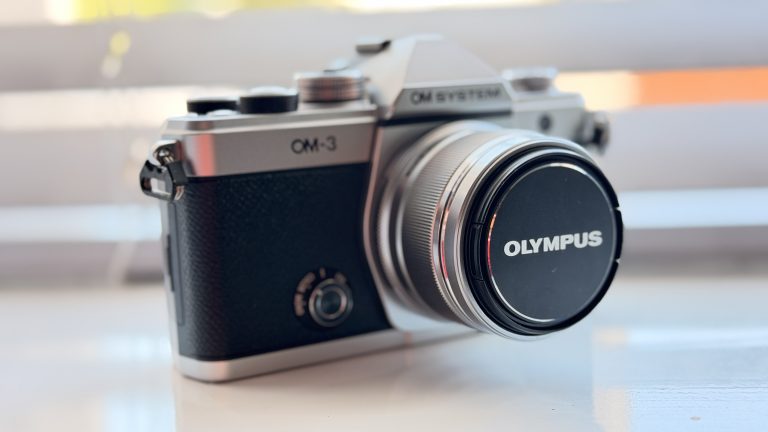
In my last article I described how I’d sold my Nikon Zf (twice) and purchased an OM System OM-3. In this post, I’d like to go into a little more detail about what led me to purchase that particular camera because, in many ways, it wasn’t really about the camera itself, at least not in terms of specifications. Instead, it was more about me, how I view photography these days and the situations in which I want a camera with me. Essentially it’s about choosing the right tool for the job because the number of jobs for which I would require a large, heavy, full frame camera with professional grade lenses is pretty much nil these days.
I Changed
Let’s go back to 2015. I developed a renewed interest in photography having previously owned a plethora of digital cameras stretching back to 1999. My Canon EOS 300D (Digital Rebel / Kiss Digital) had seen good use but had been in a box for a few years as my interest in photography waxed and waned. In late 2015, I got the bug again. I started by purchasing a new DSLR, a Canon EOS 70D but before long I’d graduated to an EOS 5 Mark IV with a full suite of professional lenses. In tandem, I’d set up my photography business and paid work was starting to trickle through. I wanted the best images possible!
Looking back, I’m not convinced any of it made me take better pictures.
I was the kind of person who would pore though reviews. I wanted the intricate details of how a camera or lens would perform. I would happily spend an entire evening comparing ISO crops at 6400 or reading lens sharpness charts. At the time, that all felt perfectly sensible. Looking back, I’m not convinced any of it made me take better pictures.
This golden period lasted a few years before I became utterly burned out. Perhaps in a future post I’ll go into detail about the reality of running turning a hobby into a business but, ultimately, I decided that it wasn’t for me. Not only did I shut the company down but I completely lost interest in photography and sold the vast majority of my kit.
I dallied with other cameras for a few years before a renewed interest in film photography reignited the fire. Suddenly I wanted to take pictures again. But this time, I didn’t want to set up a studio with complicated lighting, nor did I want to go on a hike through the Lake District to find the perfect composition and light. I just wanted to have a camera with me on nights out, at family events, gigs, walks in the park; just day to day life.
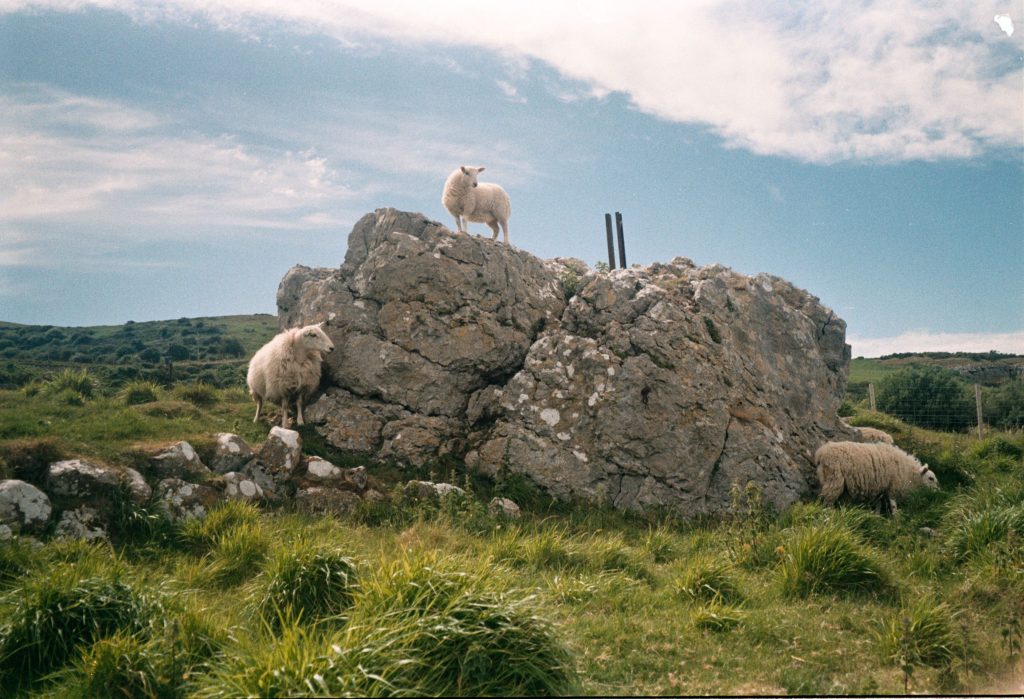
My interest in film did something else too. It made me realise that I actually didn’t care all that much about sharpness and the minutiae of performance. I wanted the imperfections of analogue. The slight graininess, the halation, an uncontrolled flare. But I also recognised that film isn’t, for me, always the best choice of medium and that a decent digital camera would be a useful addition to my arsenal.
Now you may already be ahead of me. You might already understand why the Nikon Zf was the wrong choice for me, especially if you’ve read my previous article. I hadn’t yet learned that lesson.
By now my photography had become dependent on reducing friction. Anything which prevented me taking a particular camera out or prevented me from getting the shot I wanted was considered friction. And that meant choosing cameras I could take anywhere which still gave me the power and control to take the shot I wanted. There is nothing like the freedom of grabbing a camera, putting it in your pocket and forgetting it’s there until the moment you need it; then being able to pull it out and quickly dial in the settings to take that perfect shot.
The Power of Beauty
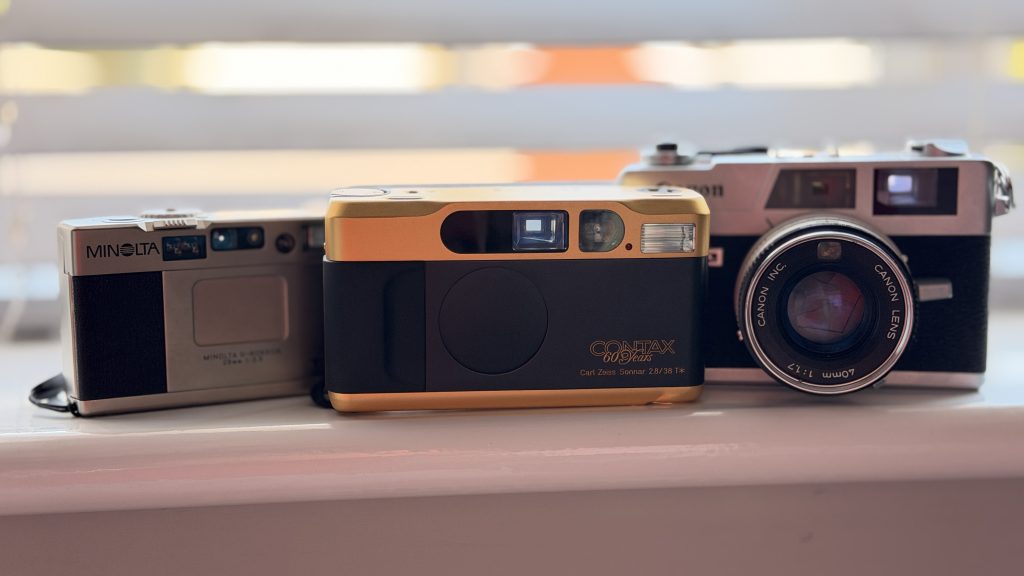
Once I realised that, regrettably, the Zf and most other full frame cameras weren’t for me, I started to reassess what I actually wanted in a camera. Which camera suited my needs best? And that started with the design. I’m not talking about the button layout or even ergonomics. Those are practical considerations and speak to the usability of the camera. No, I’m talking about how it looks, what it’s made from and simply how it makes me feel.
A beautifully designed object invites care, it invites me to pick it up, and it invites me to use it.
I realise that this can be a contentious point. A great many photographers see their camera as nothing more than a tool. As long as it gets the shot, why would anybody care about how it looks other than to show off to other people?! Opinion appears to be pretty polarised on this and it seems to be something which is difficult to explain to the non-believers. If you don’t understand, it’s highly unlikely anybody can explain it to you. Firstly, it’s not about it grabbing the attention of others. It’s a purely internal thing. A beautifully designed object invites care, it invites me to pick it up, and it invites me to use it. The cameras I’ve kept longest have all had one thing in common. I’ve enjoyed owning them even on the day I didn’t take a single photograph.
Perhaps part of it is knowing that somewhere, years ago, a team of designers and engineers cared enough to argue over the radius of a corner, the weight of a shutter button or the texture of a leatherette covering. Those decisions don’t change the photographs the camera produces, but they absolutely change the experience of using it. They remind me that somebody loved making this object just as much as I hope to enjoy using it. And maybe, just maybe, this is how inanimate objected are imbued with something of a soul.
This is important to me. It’s why I bought the Zf. It’s part of the reason I love my Contax T2 and Minolta TC-1. Beautifully designed objects that were meant to be both used and admired.
With the Zf in my shop window, I knew its replacement had to embody those characteristics. That ruled out 90% of modern digital cameras straight away. Canon and Sony just don’t make a camera like that. That’s not a criticism of either company. They build some extraordinary cameras. But, when I looked at them, I saw incredibly capable pieces of technology but I didn’t see anything that I would want to pick up every morning. That difference mattered more than I expected.
What I Was Really Looking For
I won’t falsely build up the suspense and suggest that I agonised over dozens of different cameras to replace my Zf. I ruined the opportunity to do that in the first line of this article. The OM System OM-3 had been in my mind for over a year but I didn’t take a direct path there.
For reasons that won’t surprise you if you’ve read this far, I had a Fuijfilm X100VI. That camera, its place in my collection and the fact I no longer own one deserves an article all of its own. I’m a big fan of its aesthetic and the manual dials Fuji are including on quite a few cameras in their range. You might expect that, for someone like me, the XT-5 or X-E5 would be a great choice to replace the Zf. The retro look, premium materials, ‘analog’ dials. And yet they didn’t really make the shortlist. Perhaps that was because I was struggling a bit with my X100VI or perhaps it was because even Fuji X-Mount lenses can be big, expensive an heavy. Or perhaps it’s simply because there was an even smaller, lighter, less intrusive camera still weighing heavily in my thoughts.
The OM-3 had the looks. It had the features. The of lenses were plentiful and, surprisingly to me, genuinely affordable. There was nothing about it I didn’t love, except the micro four-thirds sensor. Having owned a plethora of full frame cameras over many years, I’d become accustomed to the idea that anything less would be a severe compromise in terms of getting that smooth, creamy bokeh and excellent low light performance. It was an ingrained belief that’s difficult to change. No serious photographer would settle for less than full frame, right?
Somewhere along the way I’d forgotten that being serious about photography has very little to do with the equipment. It has everything to do with actually making photographs.
And then I had the realisation I needed. I was no longer a ‘serious photographer.’ And I’m not in competition. I don’t need to worry about what other people might think. In truth, I never should have. For years I’d equated being serious with carrying the biggest sensor, the sharpest lenses and the most capable camera. Somewhere along the way I’d forgotten that being serious about photography has very little to do with the equipment. It has everything to do with actually making photographs.
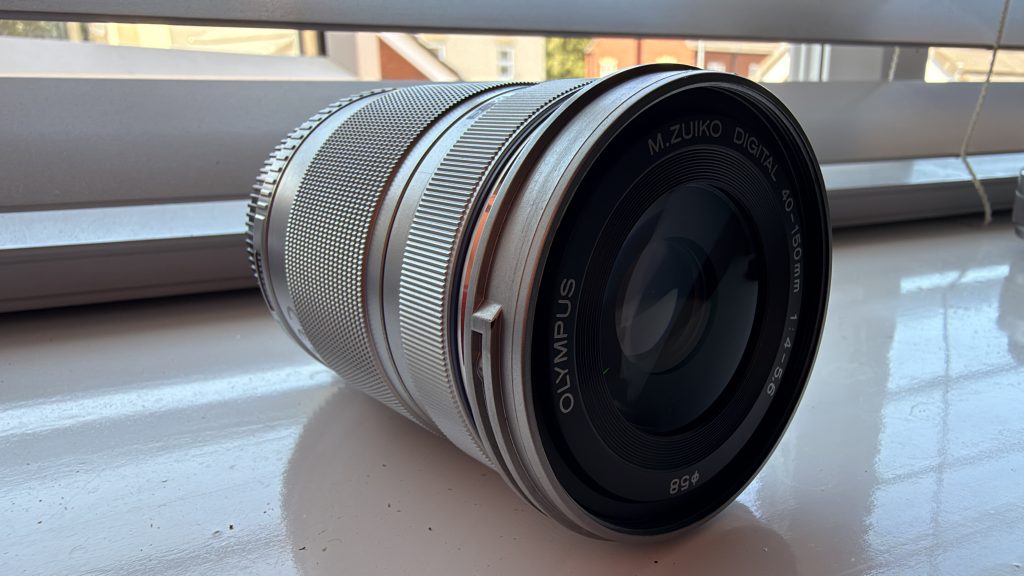
For the first time in years, I wasn’t buying the camera I thought I ought to own. I wasn’t looking for a camera that would impress anyone else. I wasn’t building a business. I wasn’t trying to justify a purchase. I simply wanted a camera that fitted my life. That turned out to be an incredibly liberating way to shop. I was buying the camera I genuinely wanted. Whether I’d made the right decision was something I’d only discover by using it.
Next time: I Gambled on Micro Four-Thirds [Coming Soon]